Advocacy and Legal Updates
Medicaid Changes Start to Take Effect
by Artemis Policy Group
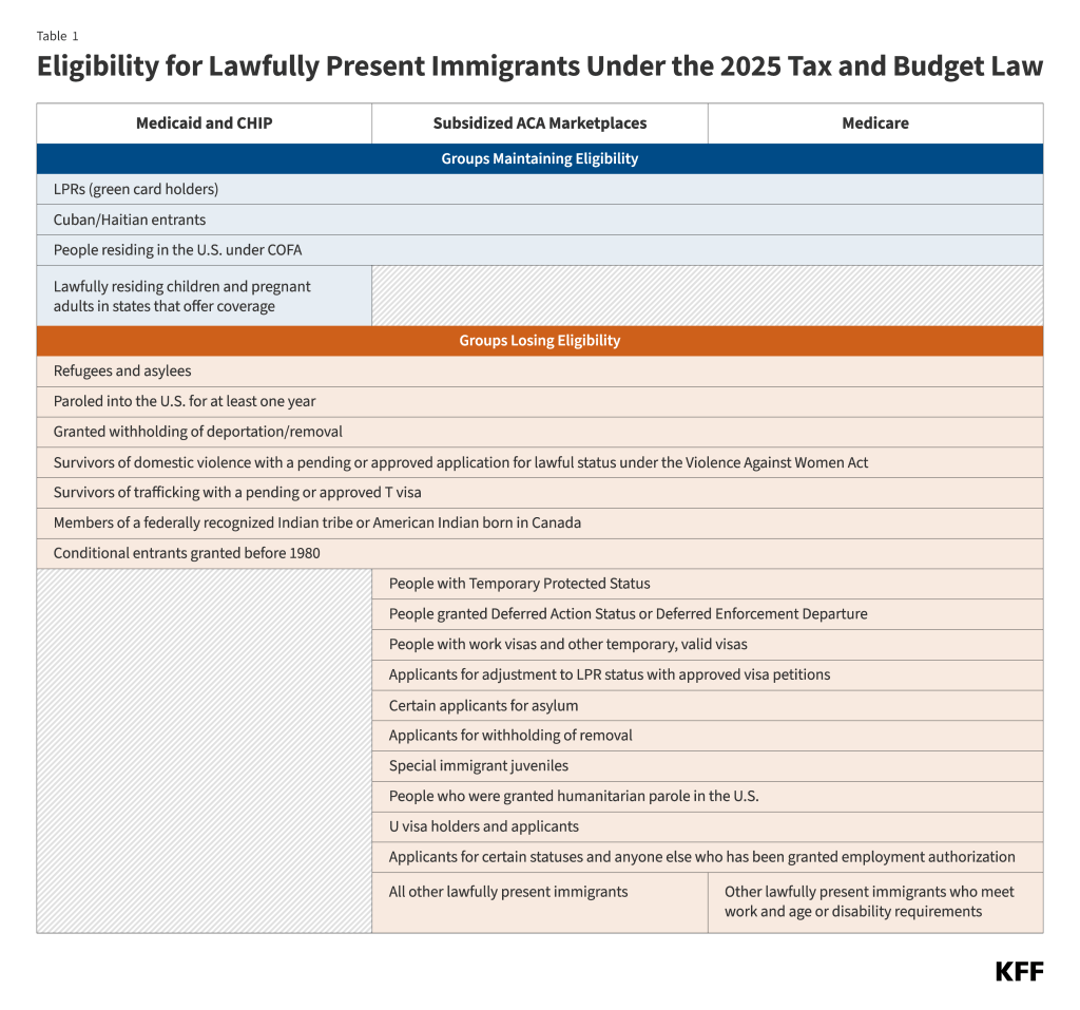
As previously reported, a federal law enacted in 2025 (H.R. 1, originally called the One Big Beautiful Bill Act) is starting to dramatically reshape the Medicaid program. On October 1, 2026, new policies went into effect ending eligibility for federally-funded Medicaid and CHIP coverage for certain groups of lawfully present immigrants. (See KFF table reprinted below; for information on state-funded Medicaid and CHIP programs that continue to provide coverage for certain groups of lawfully present immigrants, see this additional KFF resource.) HTCs should note that in families with blended immigration statuses, family members who are U.S. citizens remain eligible for Medicaid/CHIP coverage.
Other major changes to Medicaid eligibility are coming for HTC patients and millions of other Americans when H.R. 1’s “community engagement” [work] requirements go into effect for adults covered under the Medicaid expansion pathway. The Hemophilia Alliance, working with national bleeding disorders partners, has created a toolkit that we hope will help HTCs, chapters, and member organizations understand and explain Medicaid work requirements to the patient communities you serve. The toolkit includes both a comprehensive overview of the new requirements and individual pages or sections that you may wish to use in your communications with patients.
Alliance Hill Day
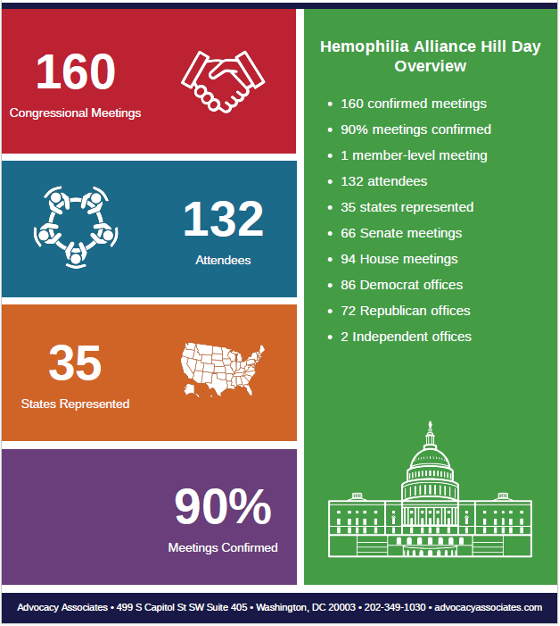
The Hemophilia Alliance held its 15th Hill Day on September 29, 2026. Participating advocates included patients and families living with bleeding disorders; hemophilia treatment center (HTC) staff; and representatives from the National Bleeding Disorders Foundation, Hemophilia Federation of America, and the Coalition for Hemophilia B – in all, 132 people from 35 states! The group visited 160 offices across Capitol Hill to educate lawmakers about bleeding disorders and policies important to the bleeding disorder community:
- The importance of the federal hemophilia programs at HRSA and CDC.
- The need to maintain HTCs’ ability to participate in the 340B program, and to avoid one-size-fits-all reforms that ignore the unique characteristics of HTC 340Bs.
- Ending copay accumulators, maximizers, and other insurer practices that make it hard for patients to afford their medicines and stay on therapy.
The Hemophilia Alliance thanks all the individuals and groups who participated in this year’s Alliance Hill Day. Our unified voice helps lift up policies that will benefit all people living with bleeding disorders!